Body composition
What Is a DEXA Scan and How Does It Measure Body Composition?
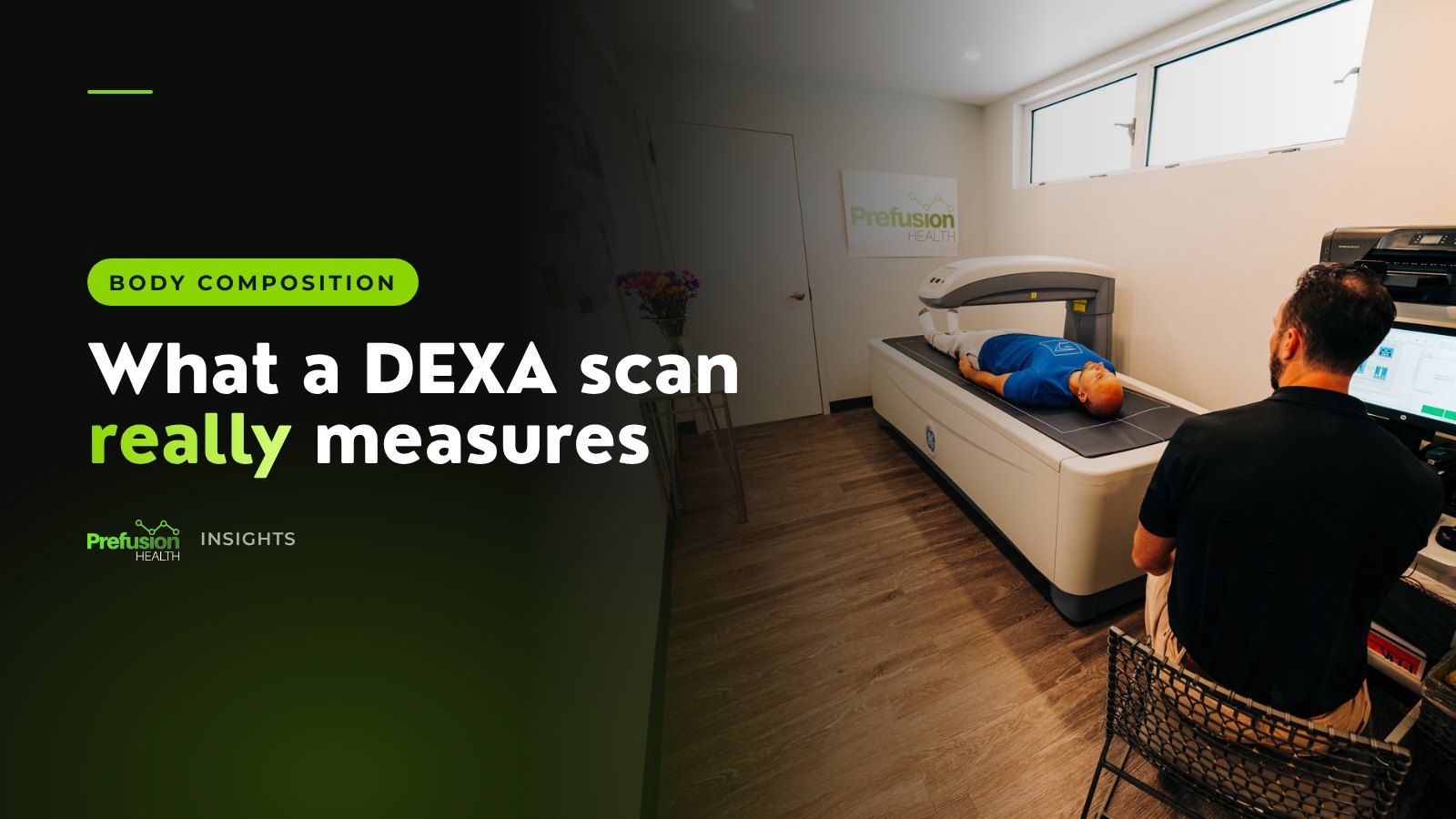
Two people can weigh the same and have completely different bodies. Here is how a DEXA scan tells them apart, in about seven minutes.
Weight loss is hard, especially when diet and exercise alone have not moved the number. GLP-1 therapy has become one of the most talked-about medical options for weight management. Here is how it works, what the benefits and side effects are, and what to expect if you start it at Prefusion Health.
GLP-1 stands for glucagon-like peptide-1, a hormone your body makes naturally. It plays a role in appetite, digestion and blood sugar. GLP-1 medications work in a similar way to this hormone, and they are prescribed to support weight management.
GLP-1 therapy is not a quick fix. It works best as part of a wider plan that includes nutrition, training and regular check-ins with a clinician.
GLP-1 medications can help you feel full for longer, which makes it easier to eat less without relying on willpower alone.
With appetite under better control, many people find it easier to build consistent, sustainable eating habits.
GLP-1 medications also act on the body's blood sugar regulation, which is part of overall metabolic health.
When weight comes off quickly, some of it can be muscle. The scale cannot tell you which, and losing muscle works against you: it slows your metabolism and makes the result harder to keep.
That is why every GLP-1 plan at Prefusion starts with a DEXA scan and is tracked with follow-up scans. You see exactly how much fat and how much muscle you are losing, and if the loss is not coming from fat, the plan is adjusted. Nutrition and protein targets are built to protect lean mass.
Like any medication, GLP-1 therapy can have side effects. The most commonly reported are:
Side effects vary from person to person and are often managed through dosing. Always discuss your health history and any concerns with your provider, who decides whether GLP-1 therapy is appropriate for you.
Prefusion also runs a 12-week low dose GLP-1 program for $299 a month, with a PA evaluation, two DEXA scans and check-ins at week 6 and week 12. You can read about it on the GLP-1 weight loss page.
Physician-managed, tracked with DEXA, at all three Prefusion clinics.
A physician-prescribed treatment using medications that act like the GLP-1 hormone, which plays a role in appetite, digestion and blood sugar. It is used as part of a wider weight management plan.
The most commonly reported are nausea, digestive discomfort, changes in appetite and other gastrointestinal symptoms. They vary between people and are often managed through dosing.
Rapid weight loss can include muscle. At Prefusion, GLP-1 plans are tracked with DEXA scans so you can see whether the loss is fat or muscle, and the plan is adjusted to protect lean mass.
Book a Therapy Entry visit: a provider consult, a DEXA scan and a full blood panel for $199. Your provider then decides with you whether GLP-1 therapy is appropriate.
This article is for general education and is not medical advice. Whether a test or therapy is right for you is decided with your provider, based on your health history and results.
Two people can weigh the same and have completely different bodies. Here is how a DEXA scan tells them apart, in about seven minutes.
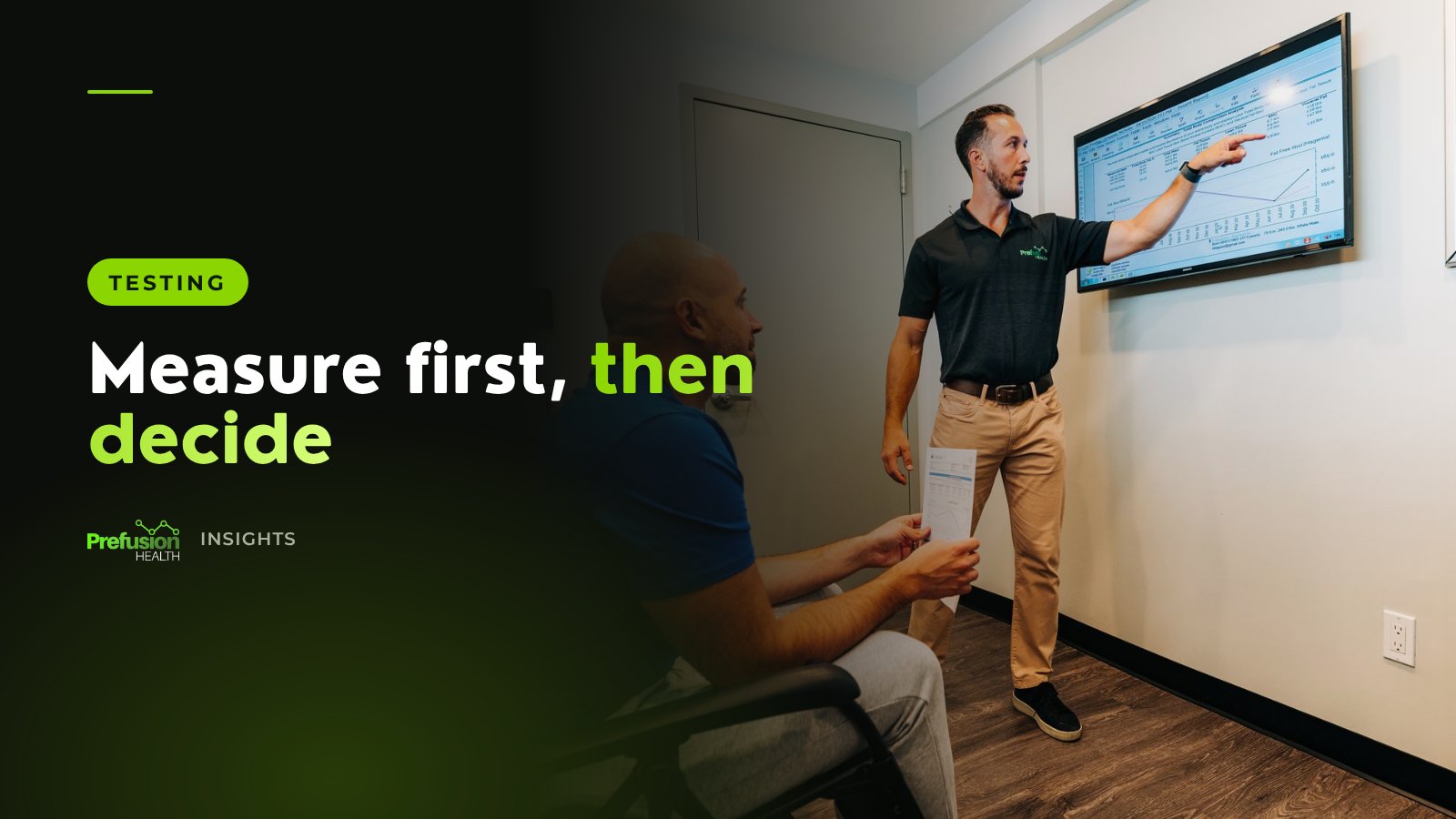
Most plans start with a guess. Here is what DEXA, RMR, VO2 max and labs show, and why measuring first changes every decision.
Book your baseline and let the data do the talking.