

How Does Alcohol Affect Your Body Composition?

Prefusion Health • January 12, 2026

Share this article

How Does Alcohol Affect Your Body Composition?

The question of whether or not we can include alcohol in a sound nutrition plan to reach our body composition goals is controversial. The law of thermodynamics states that in order to maintain body weight, the calories that we consume must be equal to calories that we expend through daily life activity and exercise. In addition, taking in more calories than we burn will lead to weight gain, whereas taking in less calories than we burned will equate to weight loss. While this law of thermodynamics sounds simple in nature, it is a bit more complex than that according to research. 


First and foremost, the term macronutrients is an umbrella word for dietary carbohydrates, protein and fat. Each of these macronutrients can be found on a nutrition facts label, and are found in all of the foods that we eat in varying quantities. Their role in the diet is to supply our bodies with a usable or storage form of energy . Carbohydrates and protein each provide us with 4 calories per gram, whereas fat supplies our bodies with 9 calories per gram. Alcohol is unique in that it is categorized as the fourth macronutrient group which provides us with 7 calories per gram. Hence, from this evaluation, we can conclude that all calories are not created equal.


It is important to note that with the presence of alcohol in the body, the metabolism of our primary macronutrients (carbs, protein and fats) gets put on hold. This is because alcohol is a toxin , therefore, it must be cleared from the body as quickly as possible. 


Since alcohol has 7 calories per gram, it acts more like a fat in the body than anything else. Alcohol also has a lot of empty calories, meaning that it has little to no nutritional value for its caloric density. Research has linked diets high in processed foods and empty calories to chronic diseases such as obesity, diabetes, cardiovascular disease and more. In particular, drinking alcohol in excess is a large contributor to visceral fat (the harmful fat that covers our organs) and can have damaging effects on our excretory system, whose purpose is to filter waste products and remove toxins from the body. If the liver becomes overly stressed as a result of drinking too much alcohol, chronic medical conditions such as fatty liver, jaundice, cirrhosis and even heart failure can result. 


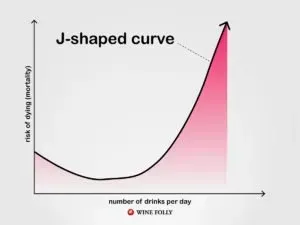
Now, this is not to say that you can’t drink socially or in moderation if you wish. After all, research supports that one glass of red wine per day is actually good for your heart thanks to an antioxidant called resveratrol . However, research also shows that there is a J shaped curve when it comes to drinking alcohol (See Figure 1). In other words, drinking one glass of red wine per day may be cardio-protective; however, not drinking at all is better than drinking multiple alcoholic beverages in the first place.


Figure 1:  


From a body composition standpoint, removing alcohol completely will only further support the weight loss deficit that we are trying to create in a nutrition program. Furthermore, removing alcohol completely will also help us decrease android (belly fat) and visceral fat (the fat that covers your organs). Research suggests that a larger android to gynoid ratio, as well as a higher visceral fat, puts us at an increased risk of developing chronic diseases such as diabetes, fatty liver and cardiovascular disease.


If you are a social drinker, then follow the helpful tips below when drinking in order to minimize fat storage and stay on track towards reaching your health goals. 


  1. Choose clear beverages which tend to be lower in calories. Examples include vodka, tequila, or gin as opposed to drinks like beer, bailey’s or other liquors. 
  2. Save calories by using low to no-calorie mixers. For example, vodka with seltzer would be a good choice while sugary mixers such as juice, soda and Red Bull provide you with empty calories that are detrimental to body composition. 
  3. Alternate alcoholic beverages with water. This will help you not only prevent dehydration, but it can also help prevent a hangover the next day. 
  4. Be mindful of the calories that you consume from food while drinking as this is where most of us tend to get in trouble. 
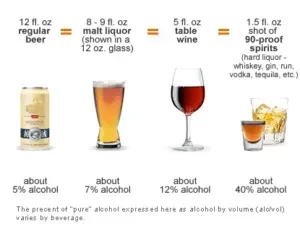
  5. When in doubt, stick to the serving size! Believe it or not, one serving of alcohol is equal to only 5oz of wine, 12oz of beer, or a 1.5oz shot (See Figure 2)


Figure 2:

So, if you are ready to get started on your health journey, or to learn more about your personalized nutrition needs, then visit www.prefusionhealth.com for more information.


Click here to schedule an appointment with our in-house Registered Dietitian today! 

Recent Posts

By Prefusion Health February 19, 2026
Partnering With Prefusion Health: Objective Testing That Elevates Client Care
By Prefusion Health February 19, 2026
Why Resting Metabolic Rate (RMR) Testing Is the Foundation of Any Personalized Nutrition Plan
By Prefusion Health February 19, 2026
Peptide Therapy: What It Is, Why It Works, and Why Measurement Matters
By Prefusion Health February 19, 2026
Understanding DEXA Scans: The Foundation of Smarter Health, Longevity, and Performance Most people check on their health using things like a scale, a smartwatch, or how their clothing fits. These tools can be useful, but they only show a small piece of the bigger picture. They don’t reveal how much muscle you actually have, how much fat you’re carrying, or where the risks might be hiding. A DEXA scan changes all of that. At DexaFit New York, DEXA scans are the starting point for anyone serious about improving body composition, performance, or long-term health. Whether you're an athlete trying to refine your training or someone looking to take control of your health again, a DEXA scan gives you clarity that traditional tools simply can’t. What a DEXA Scan Actually Measures A DEXA (Dual-Energy X-Ray Absorptiometry) scan is a medical-grade body composition test that takes about 10–15 minutes to complete. In one appointment, you receive detailed insight into: • Total body fat percentage • Lean muscle mass and how it's distributed • Visceral fat (the deeper fat around your organs) • Bone density • Muscle imbalances from left to right • Android/gynoid fat distribution patterns Unlike gym devices or smart scales that provide estimates, a DEXA scan measures your body with the highest available accuracy. This is why athletes, physicians, and performance facilities rely on it as the gold standard. If you’re searching terms like DEXA scan New York , this is exactly the type of advanced body composition analysis you’re looking for. Why DEXA Matters More Than the Scale A scale can tell you your weight; but it can’t tell you what your weight is made of. Two people can weigh exactly the same and have completely different levels of health. One might have: • Higher lean muscle • Low visceral fat • Strong bone density • A healthy metabolic profile While the other has: • Lower muscle mass • High visceral fat risk • Weaker bone density • A higher likelihood of metabolic issues From the outside, they may look similar. Internally, their bodies are in completely different states. This is why relying on weight alone is misleading. A DEXA scan provides the information needed to make smarter decisions about training, nutrition, and lifestyle. For Athletes: Precision That Elevates Performance Athletes use DEXA scans as a tool to refine every aspect of their performance. Knowing exactly how much lean mass they’ve gained, whether imbalances exist, or how their power-to-weight ratio is shifting throughout the year helps them train with intention. It’s one of the most effective ways to track improvements in body composition over time; especially in sports where strength, endurance, and efficiency matter.
January 12, 2026
Insulin: Good or Bad?
By Prefusion Health January 12, 2026
What is Prefusion Health?
By Prefusion Health January 12, 2026
Nutrition Periodization for Aesthetics vs. Performance vs. Longevity
By Prefusion Health January 12, 2026
Top Foods That May Be Causing Inflammation In Your Body
By Marketing Crew January 12, 2026
Sympathetic vs. Parasympathetic Nervous System
By Marketing Crew January 12, 2026
Why the DEXA Scan is the Gold Standard for Measuring Body Composition
Show More